


How could the U.S. election affect Ä¢¹½ÊÓƵ aid funding?

Explainer
Explainer
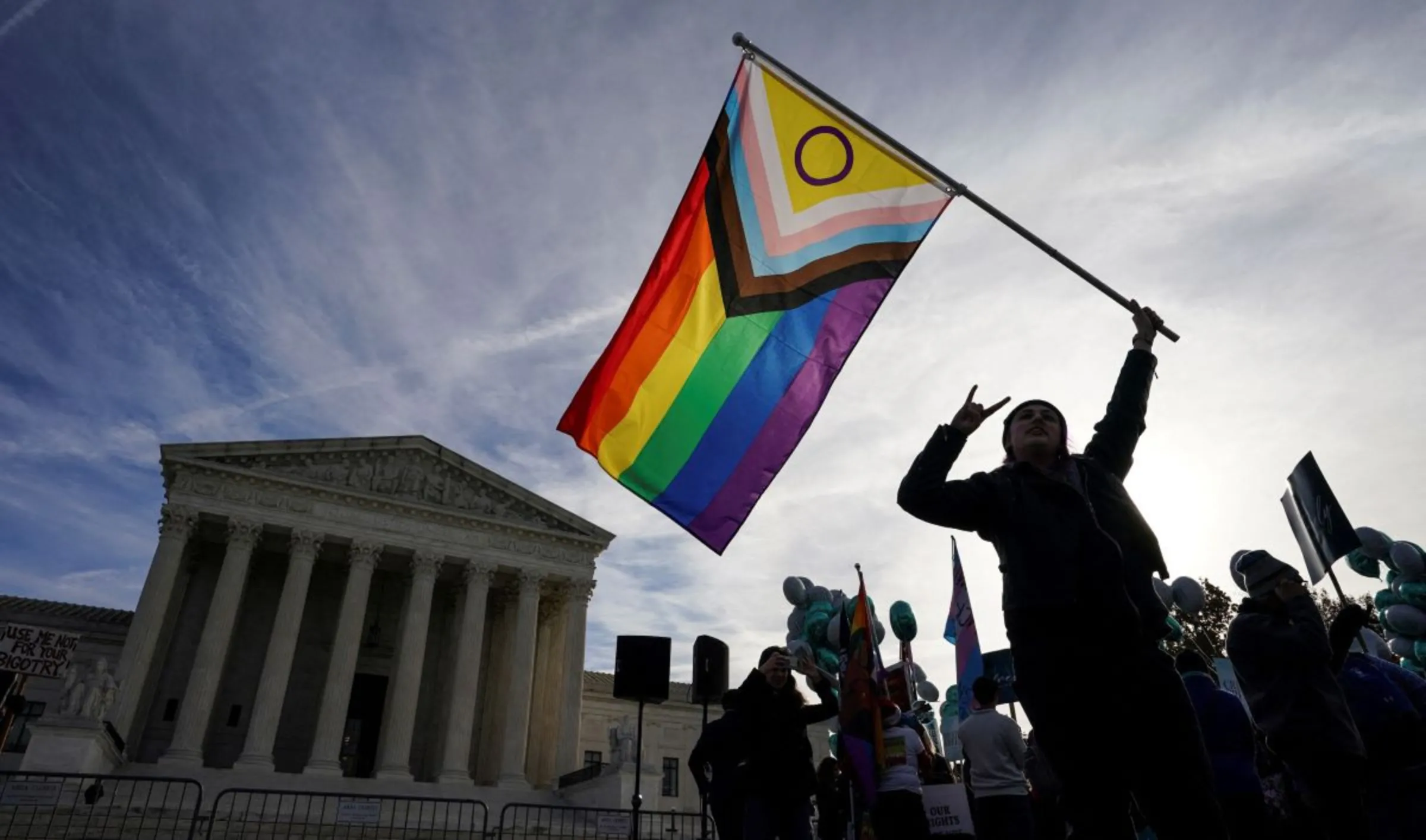
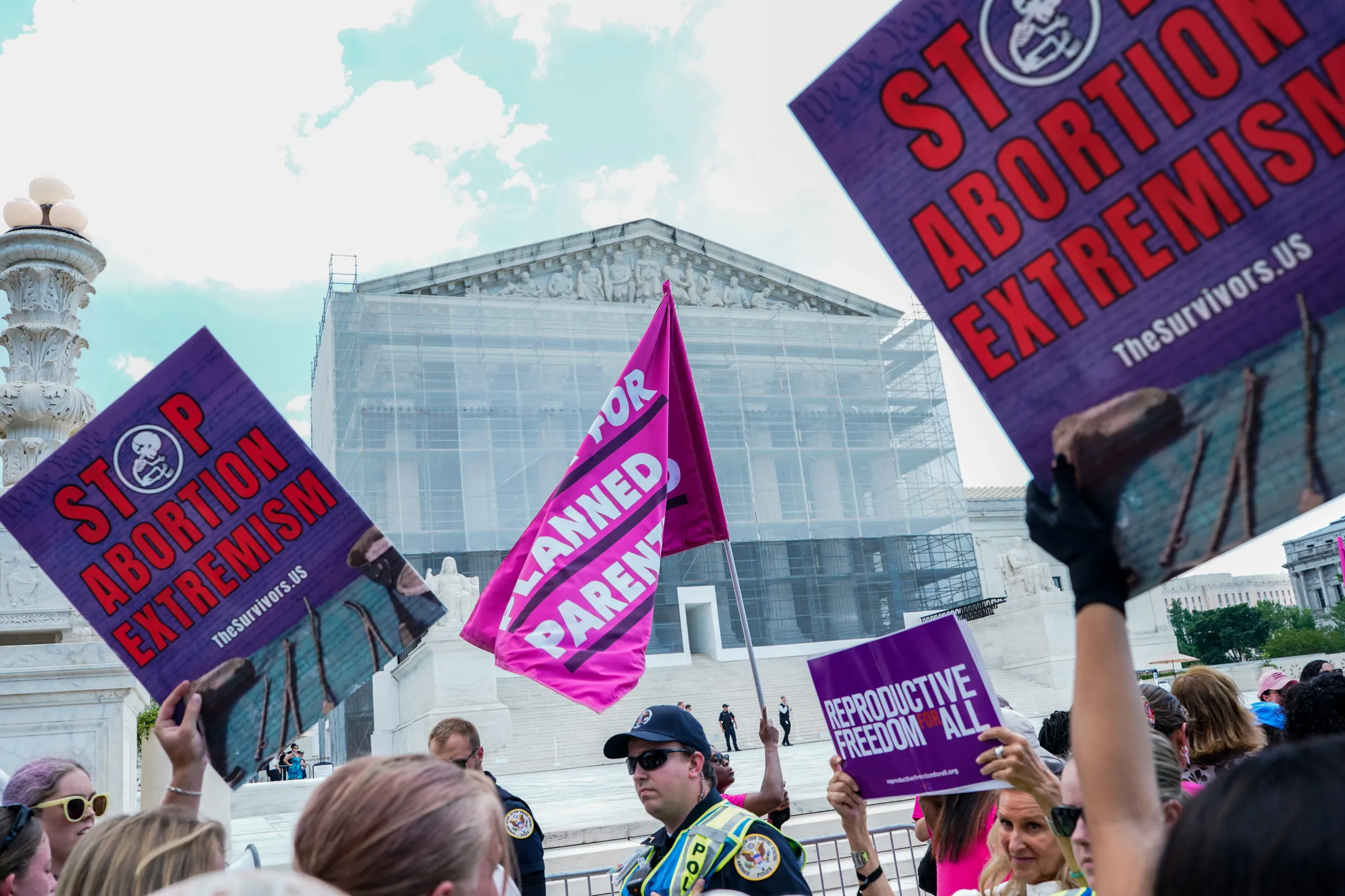
A protester waves an LGBT rights 'pride flag' as activists gather outside the U.S. Supreme Court in Washington, U.S., December 5, 2022. REUTERS/Kevin Lamarque
What’s the context?
While Democratic presidents have backed Ä¢¹½ÊÓƵ rights with development aid, Republicans have reversed most policies when in office
US Elections 2024: Read our full coverage.
LONDON - Democrats and Republicans have had completely different stances on funding Ä¢¹½ÊÓƵ rights around the world through development aid.
Since 2011, Democratic presidents have supported Ä¢¹½ÊÓƵ rights through development policy.
Much of these efforts were reversed during Donald Trump's administration, while President Joe Biden strengthened Ä¢¹½ÊÓƵ aid programs and policies during his term.
Here's what you need to know.
When did the U.S. first support Ä¢¹½ÊÓƵ people as part of its aid policy?
Following early leaders like Sweden, the United States put resources behind Ä¢¹½ÊÓƵ equality in 2011 when then-Secretary of State Hillary Clinton , with Washington pledging $3 million to a partnership
The move coincided with a broader push, as Barack Obama’s administration instructed U.S. diplomats and foreign aid workers to do more to promote the rights of lesbians, gays, bisexuals and transgender persons abroad.
In 2015, Obama appointed the first special envoy to advance Ä¢¹½ÊÓƵ rights.
How does the USAID support Ä¢¹½ÊÓƵ people?
Biden's administration supports Ä¢¹½ÊÓƵ rights through specific programs and a broader policy.
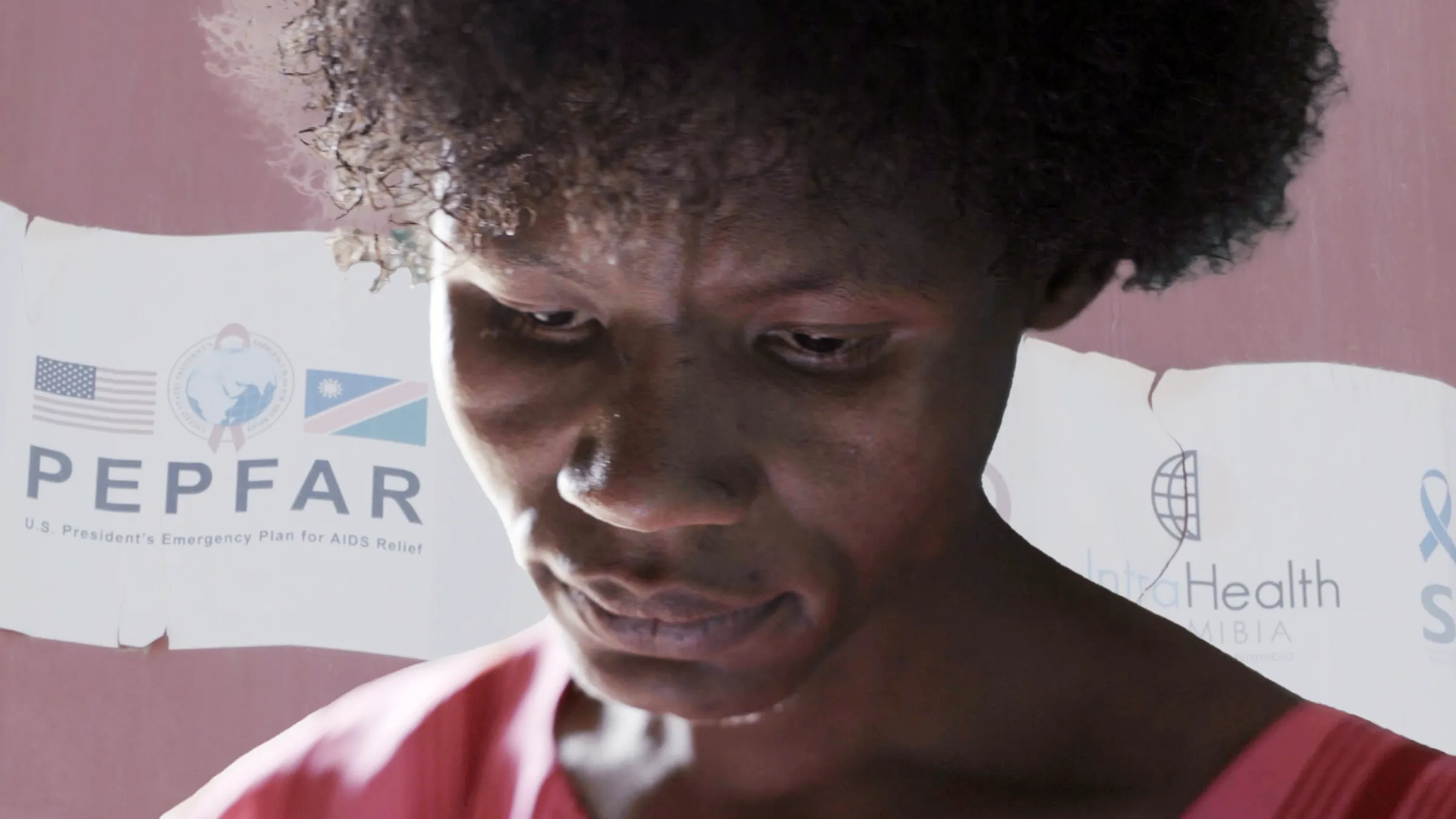
While the Global Equality Fund and the President's Emergency Plan for AIDS Relief (PEPFAR) are funded through the State Department, the U.S. Agency for International Development (USAID) contributes $15 million to two multi-donor programs dedicated to Ä¢¹½ÊÓƵ rights.
USAID’s Global Human Rights Initiative , including Africa and Asia, providing grants for activities that span research into global attitudes toward Ä¢¹½ÊÓƵ people to funds supporting emergency responses to wrongful arrests.
The agency’s Alliance for Global Equality is a public-private partnership run by rights group , funding small projects in western and sub-Saharan Africa, Latin America, the Caribbean and Asia.
The program provides support to local nongovernmental organizations for initiatives like improving their financial resilience and providing mental health support, with at least 25% of funds going to transgender and intersex-led groups.
In 2023, the Biden administration launched the , which aims to ensure that "USAID staff should be proactive and implement intentional efforts to reach and include LGBTQI+ individuals in programming."
The purpose of the policy is to recognize that Ä¢¹½ÊÓƵ people are not a niche population and that all development programs can impact them, said Kristopher Velasco, an assistant professor of sociology at Princeton University.
Conversely, if HIV and AIDS response efforts are funded through conservative religious groups or organizations focused on the so-called "natural family," that can limit access for Ä¢¹½ÊÓƵ people, Velasco said. The natural family is a conservative view that marriage is between a man and woman.
"The State Department (would be) counteracting its own programs by not taking this into account," said Velasco, who researches how institutions facilitate the expansion of Ä¢¹½ÊÓƵ rights.
How could the election impact this funding?
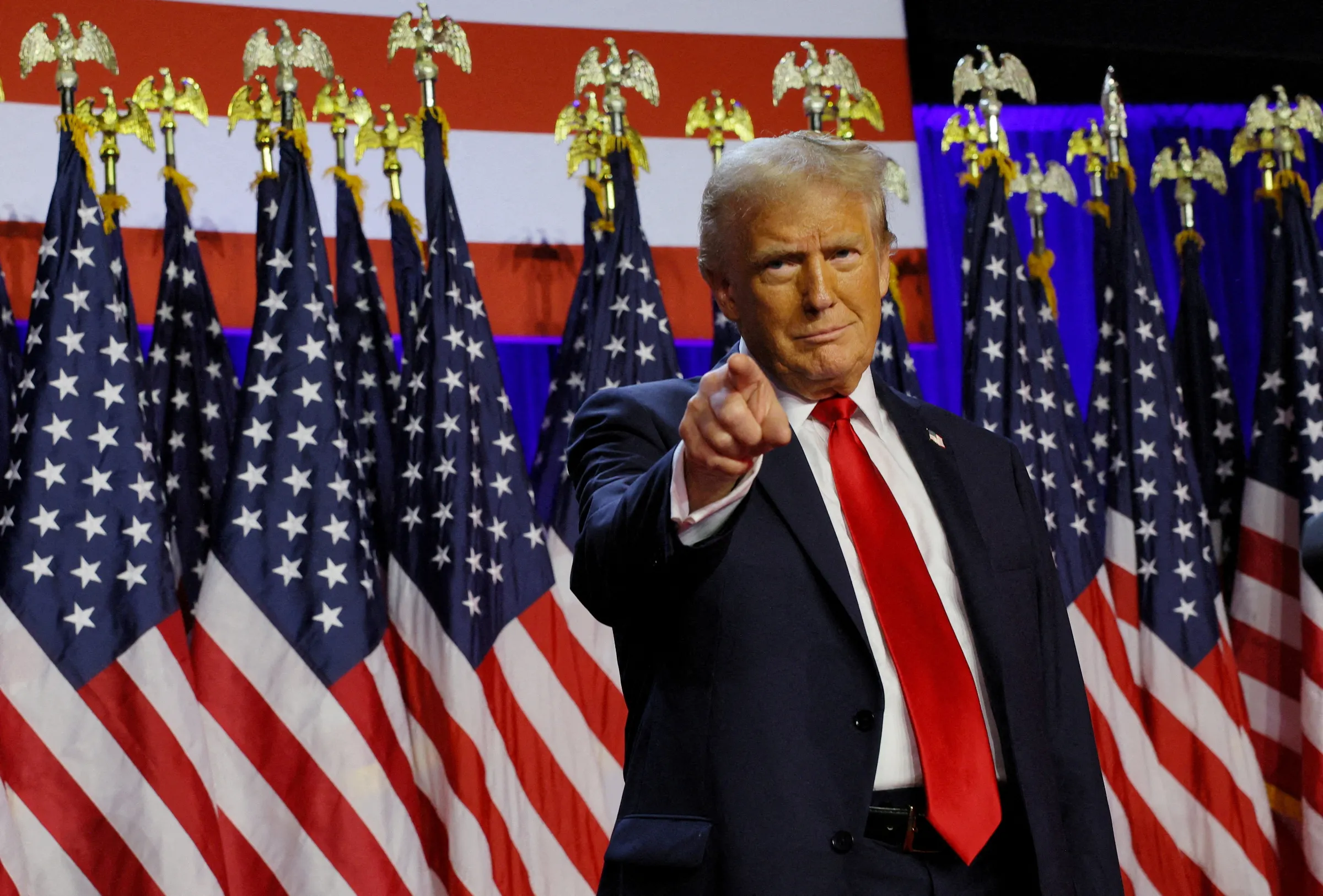
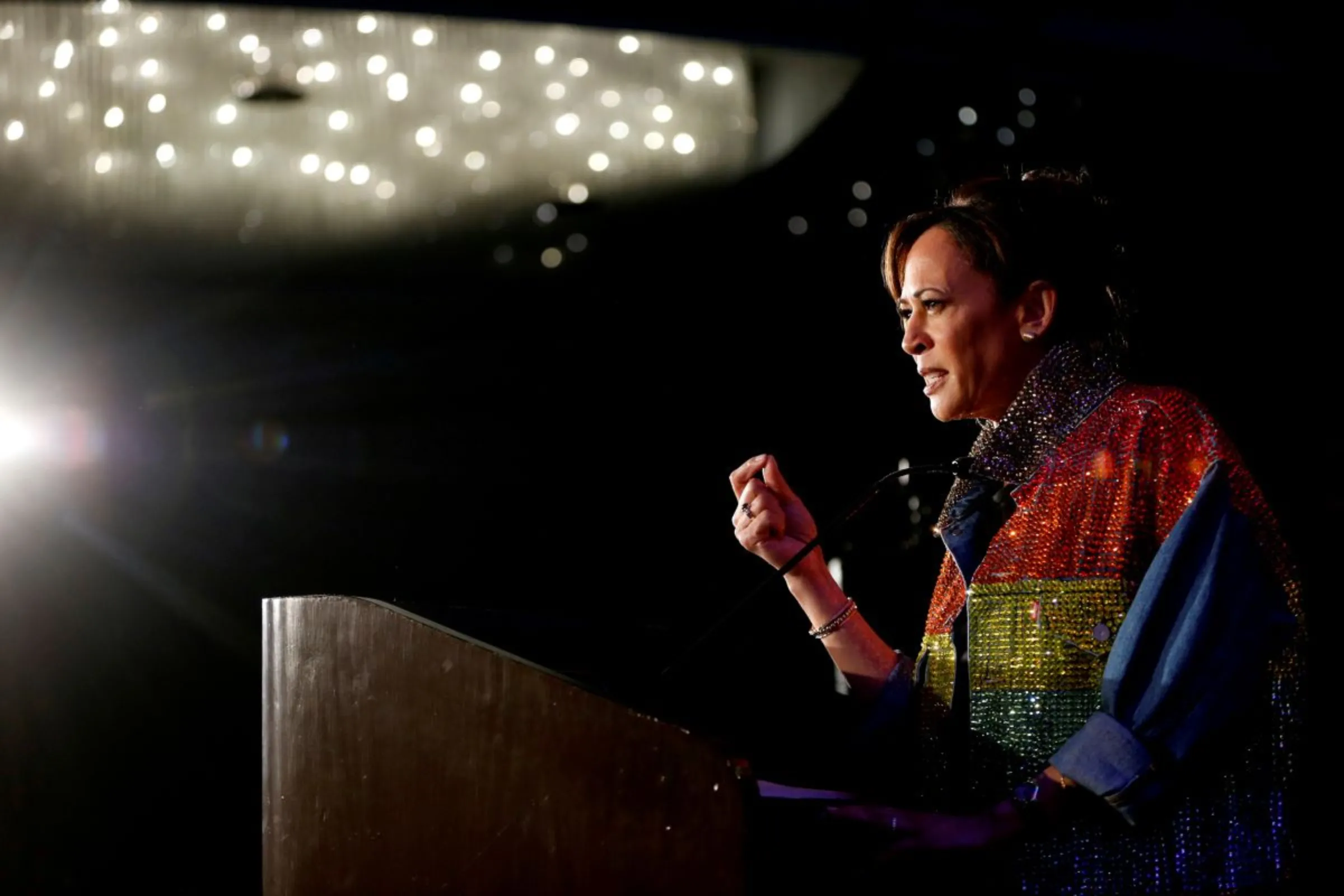
Neither Republican presidential candidate Trump nor Democratic presidential candidate Kamala Harris' campaigns responded to requests to clarify their policy plans on Ä¢¹½ÊÓƵ aid.
Harris is expected to continue the current administration's policies, while Velasco said a second Trump administration is likely to mirror his first.
During Trump's time in office, the role of the special envoy was eliminated, and in a draft update of USAID policy in 2020, all
This was largely seen as a result of then-Secretary of State Mike Pompeo's as to guide foreign policy, including a focus on religious freedom.
This put the focus on the "natural family," Velasco said, which meant not only but actively supporting "organizations and policy viewpoints that hurt these populations."
"That is something that's very, very likely to come back again under the Trump administration," said Velasco.
(Reporting by Sadiya Ansari; Editing by Ayla Jean Yackley.)
This story is part of a series supported by Hivos's programme
Context is powered by the Ä¢¹½ÊÓƵ Newsroom.
Our Standards:
Tags
- Ä¢¹½ÊÓƵ
Featured
Go Deeper
The Backstory
 These links open on


Latest on Context


- 1
- 2
- 3
- 4
- 5
- 6