



Why Ä¢¹½ÊÓƵ refugees are stuck in limbo in Kenya

Explainer
Explainer
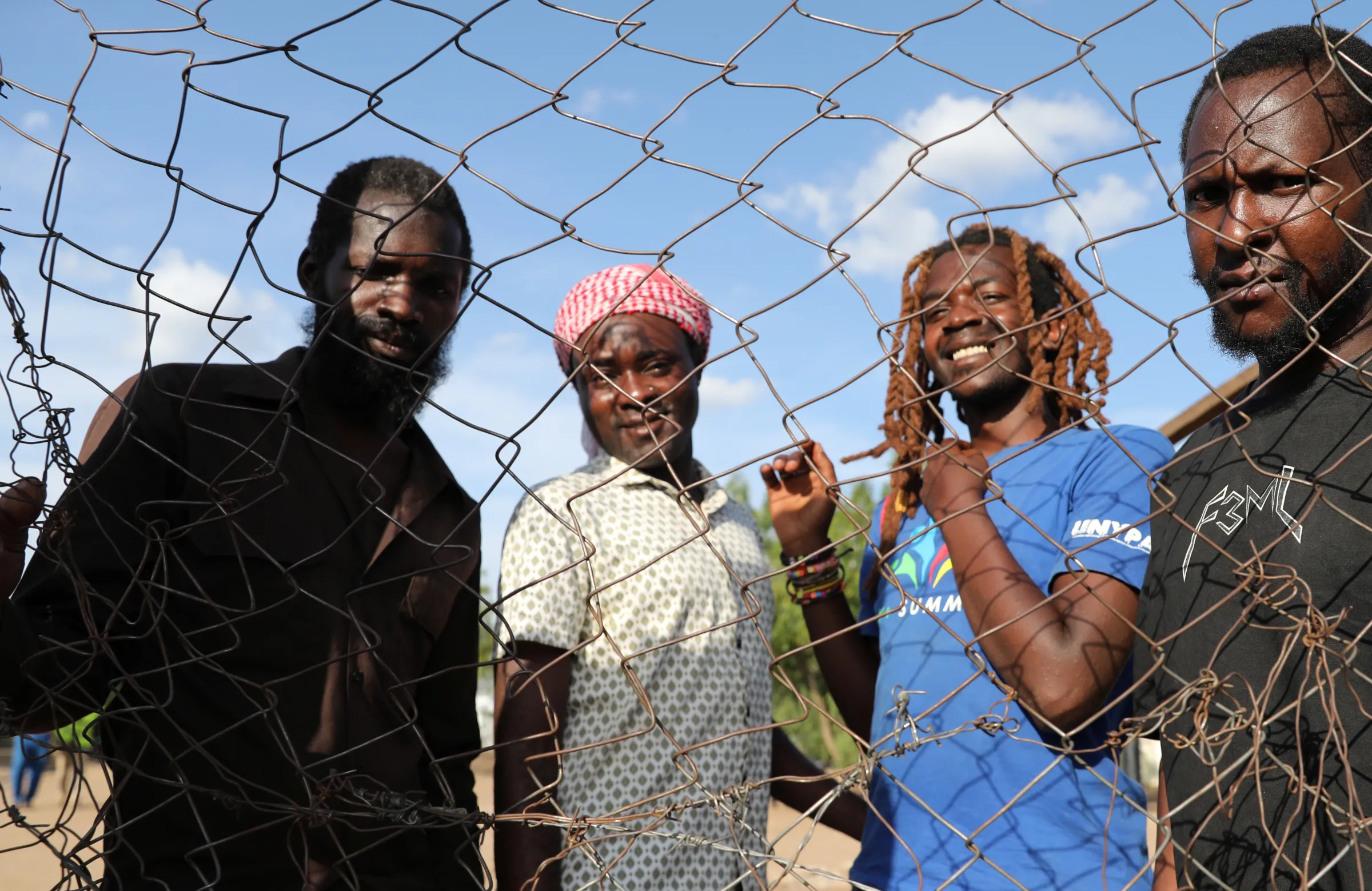
Ugandan members of the lesbian, gay, bisexual and transgender (LGBT) community, are seen at the Kakuma refugee camp, in Turkana county, northwest of Nairobi, Kenya February 22, 2020. REUTERS/Goran Tomasevic
What’s the context?
Long delays in processing Ä¢¹½ÊÓƵ asylum claims in Kenya mean Western countries are unable to resettle refugees
In Kenya, refugee claims based on sexual orientation or gender identity are facing long delays, which is from being resettled in other countries.
There are more than 219,000 asylum seekers in Kenya whose refugee status has not yet been determined, the United Nations' refugee agency UNHCR said this month. Among them are Ä¢¹½ÊÓƵ refugees from neighbouring countries.
The U.N. estimated in 2021 that Kenya was sheltering 1,000 Ä¢¹½ÊÓƵ refugees, though this number has likely grown since 2023, when neighbouring Uganda passed the Anti-Homosexuality Act, which includes long prison terms and even the death sentence for some same-sex activity.
Some Ä¢¹½ÊÓƵ applicants in Kenya are reporting years-long delays in their asylum bids. Here's what you need to know about the process of resettling Ä¢¹½ÊÓƵ refugees in Kenya.
Is Kenya a safe country for Ä¢¹½ÊÓƵ asylum seekers?
Kenya is viewed as a relatively safe haven for Ugandans fleeing persecution for their sexual and gender identity. But asylum seekers told Context they still feel unsafe in the East African nation.
Though the law is rarely enforced, gay sex is punishable with up to 14 years in Kenya, and Ä¢¹½ÊÓƵ asylum seekers also say they face discrimination in accessing employment and healthcare.
Rights groups say Ä¢¹½ÊÓƵ refugees in another country where they can be free and safe.
Can Ä¢¹½ÊÓƵ people claim asylum in Kenya?
The government's Department of Refugee Services is responsible for registering applications and determining refugee status in Kenya.
The refugee commissioner for Kenya, John Burugu, has said he does not recognise persecution for sexuality or gender as grounds for asylum.
Sexual identity "will not be a measure of convincing us to admit someone who fails to meet the threshold of being admitted as a refugee or asylum seeker," he told Context in a telephone interview in September.
Asylum seekers who meet the legal definition set by Kenya's 2021 Refugees Act would be granted protection after due process, Burugu said.
That law does not explicitly mention Ä¢¹½ÊÓƵ individuals, but says people facing persecution for their "membership in a social group" will be considered refugees.
The average time to process an asylum application in Kenya is about 12 months, according to Burugu.
However, some Ä¢¹½ÊÓƵ applicants say theirs are taking several years and fear Kenya is blocking their applications because of their sexual orientation or gender identity.
How does resettlement work?
Ugandan Ä¢¹½ÊÓƵ asylum seekers in Kenya told Context they are hoping for sponsorship to resettle in Western countries, including Canada and Sweden.
The resettlement process involves transferring refugees from the country where they first seek asylum to a third country that agrees to admit them as refugees with permanent residence status.
This process is not a right available to all refugees and is based on
Kenya has administered refugee decisions on behalf of the U.N. since 2006, and only refugees who have been registered as refugees by the Kenyan authorities can be considered. Those refugees whose official status is still pending do not yet benefit from the process.
Only once they have secured the documentation will a refugee's case be submitted to a suitable third country with allocated places for refugees in Kenya.
How does private sponsorship for refugees work?
Asylum seekers often seek private sponsorship for resettlement. For example, in Canada, a private sponsorship programme allows Canadians to resettle specific individuals or families who qualify as refugees.
Private sponsors are responsible for providing refugees with settlement assistance and financial support for basic necessities like housing, food and public transport.
They can include volunteer groups, faith-based associations or other organisations. ​​Refugees pay for their own travel documents and transport costs, but outside of this, the U.N.'s refugee agency UNHCR says refugees should not pay anyone for resettlement consideration.
The resettlement country conducts its own interviews and its authorities make a final decision on each case. The entire process can take up to two or three years before a refugee can leave to resettle in a new country.
However, the process can take far longer for Ä¢¹½ÊÓƵ applicants. Most nations do not prioritise sexual minorities when considering asylum requests, according to the UNHCR.
A spokesperson said the UNHCR requests expedited decisions in cases involving people with heightened protection concerns, including Ä¢¹½ÊÓƵ people.
The UNHCR said it continues to advocate with the government in Kenya for all pending cases to be resolved, though it acknowledged "the challenges faced by Ä¢¹½ÊÓƵ refugees and asylum seekers, including delays in decision-making."
This story is part of a series supported by Hivos's programme.
(Reporting by Jade Wilson; Editing by Ayla Jean Yackley and Sadiya Ansari.)
Context is powered by the Ä¢¹½ÊÓƵ Newsroom.
Our Standards:
Tags
- Ä¢¹½ÊÓƵ
- Migration

Featured

Go Deeper
The Backstory
 These links open on
Latest on Context

- 1
- 2
- 3
- 4
- 5
- 6